

Introduction
Polycarbonate roof screws are essential components in roofing systems that use polycarbonate sheets. They help secure panels properly, reduce the risk of leaks, and improve long-term durability in outdoor environments. Whether the application is a greenhouse, patio cover, skylight, or industrial roof, choosing the right fasteners matters just as much as choosing the right sheet. This article explains the main types, installation methods, key features, selection standards, and common applications of polycarbonate roof screws, helping you make a more reliable choice before purchase.
Table of Contents
- 1. What Are Polycarbonate Roof Screws?
- 2. Types of Polycarbonate Roof Screws
- 3. Key Features of Polycarbonate Roof Screws
- 4. How to Choose the Right Polycarbonate Roof Screws
- 5. Installation Process for Polycarbonate Roof Screws
- 6. Common Installation Mistakes and How to Avoid Them
- 7. Maintenance and Inspection
- 8. Applications of Polycarbonate Roof Screws
- 9. Checklist Before Buying Polycarbonate Roof Screws
- FAQ
1. What Are Polycarbonate Roof Screws?
Definition and Purpose of Polycarbonate Roof Screws
Polycarbonate roof screws are fastening components specifically designed for securing polycarbonate sheets to structural frames. Their main purpose is to hold the panels firmly in place while also protecting them from water penetration, movement, and installation damage.
Why Specialized Screws Are Needed for Polycarbonate Sheets
Polycarbonate sheets expand and contract with temperature changes. Standard screws may hold the sheet too tightly, which can lead to stress cracks, leaks, or panel distortion over time. Specialized roof screws are designed to work with the unique properties of polycarbonate, especially when used outdoors.
Differences Between Standard Screws and Polycarbonate Roof Screws
The main difference lies in the design. Polycarbonate roof screws are usually paired with sealing washers, often made with EPDM rubber, to improve waterproofing and reduce direct pressure on the sheet surface. They are also often made from corrosion-resistant materials, which makes them more suitable for exterior roofing applications than regular screws.
Common Applications: Roofing, Greenhouses, Carports, and Skylights
These screws are commonly used in many outdoor and semi-outdoor structures, including:
- Residential patio roofs
- Greenhouse panels
- Carports
- Commercial skylights
- Industrial light-transmitting roofing systems
2. Types of Polycarbonate Roof Screws
Self-Drilling Screws vs. Self-Tapping Screws
Self-drilling screws have a drill-like point that allows them to drill into metal frames without pre-drilling the frame itself. Self-tapping screws usually require a pre-drilled hole but then create their own thread during installation. The right choice depends on the frame material and installation method.
Screws with EPDM Washers: Waterproof and Sealing Benefits
EPDM washers are one of the most important features in polycarbonate roof screw systems. They help create a watertight seal around the screw hole, reduce water infiltration, and cushion the pressure applied to the panel. This helps extend the life of both the screw and the roofing sheet.
Hex Head vs. Phillips Head Roof Screws
Hex head screws are often preferred for roofing because they are easier to install with power tools and provide better torque control. Phillips head screws are also used in some applications, but hex heads are generally more common in large roofing projects due to efficiency and reduced slipping during installation.
Stainless Steel vs. Galvanized Screws
Stainless steel screws offer strong corrosion resistance and are often preferred for long-term outdoor use, especially in humid or coastal environments. Galvanized screws are more economical and still provide a level of corrosion protection, but they may not perform as well as stainless steel in harsh weather conditions.
Screws Designed for Metal Frames vs. Wooden Frames
Polycarbonate roofing may be installed on metal or timber structures, and not all screws are suitable for both. Screws for metal frames usually have different thread patterns and drilling tips compared to screws made for wood. Choosing the right type is essential for secure fastening and proper holding strength.
3. Key Features of Polycarbonate Roof Screws
Weather Resistance and Corrosion Protection
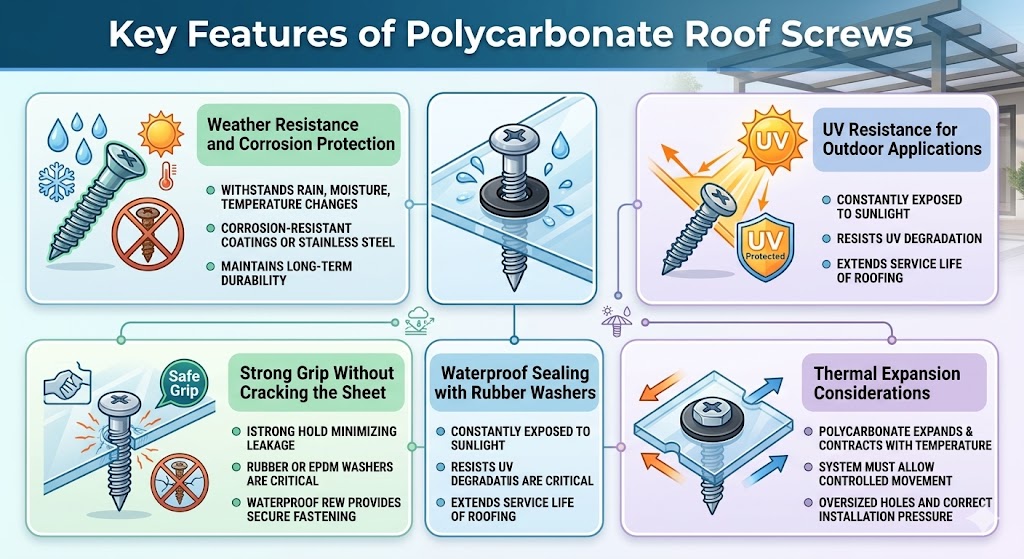
Since polycarbonate roofing is often used outdoors, the screws must withstand rain, moisture, and changing temperatures. Corrosion-resistant coatings or stainless steel construction help maintain long-term durability.
Waterproof Sealing with Rubber Washers
A good roofing screw should not only fasten the panel but also help prevent leakage. Rubber or EPDM washers are critical for maintaining waterproof performance around the fastener point.
UV Resistance for Outdoor Applications
Roof fasteners are constantly exposed to sunlight, so UV resistance matters. Components that degrade under UV exposure may lose sealing ability and shorten the service life of the roofing system.
Strong Grip Without Cracking the Sheet
Polycarbonate sheets are durable but can crack if incorrect force is applied. A suitable roof screw should provide a strong hold while minimizing local stress around the fixing point.
Thermal Expansion Considerations
Because polycarbonate expands and contracts in response to temperature changes, the screw system must allow controlled movement. This is why oversized holes and correct installation pressure are often recommended.
4. How to Choose the Right Polycarbonate Roof Screws
Selecting the Correct Length and Diameter
The screw must be long enough to pass through the panel and securely anchor into the frame, but not so long that it causes installation difficulty or poor appearance. Diameter also matters because thicker screws may hold better but require careful matching with washer size and panel thickness.
Matching Screws with Roofing Structure (Metal or Wood)
Always choose screws based on the frame material. A screw designed for metal may not perform properly in wood, and vice versa. The thread design, point shape, and holding mechanism all vary depending on the substrate.
Choosing the Right Washer Type for Leak Prevention
Washers should be durable, weather-resistant, and compatible with the screw head. EPDM washers are often considered a strong option because they maintain flexibility and sealing performance over time.
Considering Environmental Factors (Humidity, Coastal Areas, Heat)
Environmental conditions should influence screw selection. Coastal locations may require higher corrosion resistance due to salt exposure. Hot climates may demand better UV stability and allowance for stronger thermal expansion.
Load-Bearing and Wind Resistance Requirements
In areas with strong wind or heavy rainfall, screw quality and installation spacing become even more important. Roofing systems must be securely fastened to resist uplift and shifting.
5. Installation Process for Polycarbonate Roof Screws
Preparing the Surface and Positioning the Sheets
Before installation, the sheets should be aligned properly on the frame. The support structure should be clean, stable, and correctly spaced to support the panels.
Drilling Pilot Holes (When Required)
In many polycarbonate installations, pilot holes are recommended. These holes are often drilled slightly larger than the screw diameter to allow movement caused by thermal expansion and to reduce the risk of cracking.
Proper Screw Spacing and Placement Techniques
Screws should be evenly spaced according to the sheet profile, panel thickness, and expected environmental loads. Correct spacing helps distribute force more evenly and supports the entire roof structure.
Avoiding Over-Tightening to Prevent Damage
One of the most important installation rules is to avoid over-tightening. The screw should be tight enough to secure the sheet and compress the washer slightly, but not so tight that it deforms the panel or causes stress fractures.
Ensuring Waterproof Sealing During Installation
Each fastener point should be installed carefully so the washer sits flat and seals the hole effectively. Poor washer seating can result in future leakage problems.
6. Common Installation Mistakes and How to Avoid Them
Over-Tightening Screws Causing Sheet Cracks
This is one of the most common problems. When screws are driven too tightly, the pressure can damage the sheet surface and reduce the lifespan of the installation.
Incorrect Screw Placement Leading to Leaks
Fasteners placed in the wrong part of the panel profile or too close to the edge may create weak points and increase the risk of water entry.
Using the Wrong Screw Type for the Frame
A mismatch between screw type and frame material can lead to loose fastening, poor grip, or difficult installation. Always check material compatibility before installation.
Ignoring Expansion Gaps for Polycarbonate Panels
Polycarbonate moves with temperature changes. If there is no room for movement, the sheet may buckle, crack, or shift over time.
Improper Washer Installation
Washers must sit correctly and be in good condition. A damaged, misaligned, or poorly compressed washer will reduce waterproof performance.
7. Maintenance and Inspection
Regular Inspection for Loose or Damaged Screws
Over time, exposure to weather and movement may affect roof fasteners. Periodic inspection helps identify loose or damaged screws before they become larger issues.
Checking Washer Condition and Seal Integrity
Washers should be checked for brittleness, cracking, or flattening. Once sealing performance is compromised, water penetration becomes more likely.
Replacing Rusted or Worn Screws
Any screw showing corrosion, wear, or loss of holding power should be replaced promptly to protect the roofing system.
Cleaning Around Fasteners to Prevent Debris Build-Up
Leaves, dust, and debris can accumulate around fasteners and hold moisture. Routine cleaning helps reduce long-term deterioration.
Long-Term Durability Tips
To improve long-term performance:
- Use high-quality screws from the beginning
- Avoid over-tightening during installation
- Inspect the roof regularly
- Replace worn washers when needed
- Keep the roof and fastener areas clean
8. Applications of Polycarbonate Roof Screws
Residential Roofing and Patio Covers
In residential projects, these screws are commonly used for patio roofs, pergola covers, and porch canopies where weather resistance and visual neatness are important.
Greenhouse Construction
Greenhouses require secure fastening that protects the panels without causing damage. Polycarbonate roof screws help maintain durability and sealing in changing weather conditions.
Industrial Roofing Systems
In industrial settings, polycarbonate panels are often used to bring natural light into large buildings. Reliable screw systems are essential for structural stability and leak prevention.
Carports and Outdoor Shelters
Carports and shelters need durable roof fasteners that can handle sun, rain, and wind while keeping the roofing panels securely attached.
Commercial Skylight Installations
Skylights need both stability and waterproof performance. Specialized roof screws play an important role in maintaining long-term seal quality.
9. Checklist Before Buying Polycarbonate Roof Screws
Confirm Material Compatibility (Wood or Metal Frame)
Always verify whether the screws are intended for wood framing or metal framing before purchasing.
Check for Weatherproof Washer Quality
A low-quality washer can weaken the whole installation. Look for reliable sealing materials such as EPDM.
Verify Screw Coating and Corrosion Resistance
Choose screws with strong corrosion resistance, especially for outdoor use or humid environments.
Ensure Proper Size and Quantity
Make sure the screws are the right diameter and length for the sheet and frame combination, and calculate enough quantity for the project.
Choose Trusted Brands or Certified Products
Reliable products reduce installation risk and often offer better long-term performance. Consistent manufacturing quality matters in roofing systems.
Polycarbonate roof screws are essential components for secure and long-lasting installations. Choosing the right type, installing them correctly, and maintaining them regularly can significantly improve the durability and waterproof performance of your roofing system.
Whether for residential or industrial use, selecting high-quality screws helps ensure safety, stability, and long-term reliability.
FAQ
Q1: What makes polycarbonate roof screws different from regular screws?
A: Polycarbonate roof screws are specifically designed with sealing washers and corrosion-resistant materials to prevent leaks and protect roofing sheets from cracking.
Q2: Do I need to pre-drill holes for polycarbonate sheets?
A: In many cases, yes. Pre-drilling helps prevent cracking and allows room for thermal expansion of the material.
Q3: What type of screw is best for outdoor polycarbonate roofing?
A: Stainless steel or coated self-drilling screws with EPDM washers are often preferred because they offer good durability and weather resistance.
Q4: How far apart should roof screws be installed?
A: Typical spacing is often around 30 to 60 cm, but the exact distance depends on wind load, panel design, and structural requirements.
Q5: Can I reuse polycarbonate roof screws?
A: Reuse is generally not recommended, especially if the washers are worn or damaged, because this can reduce waterproof sealing performance.
 生髮怎麼做?落髮原因、治療方式與日常養護一次看懂